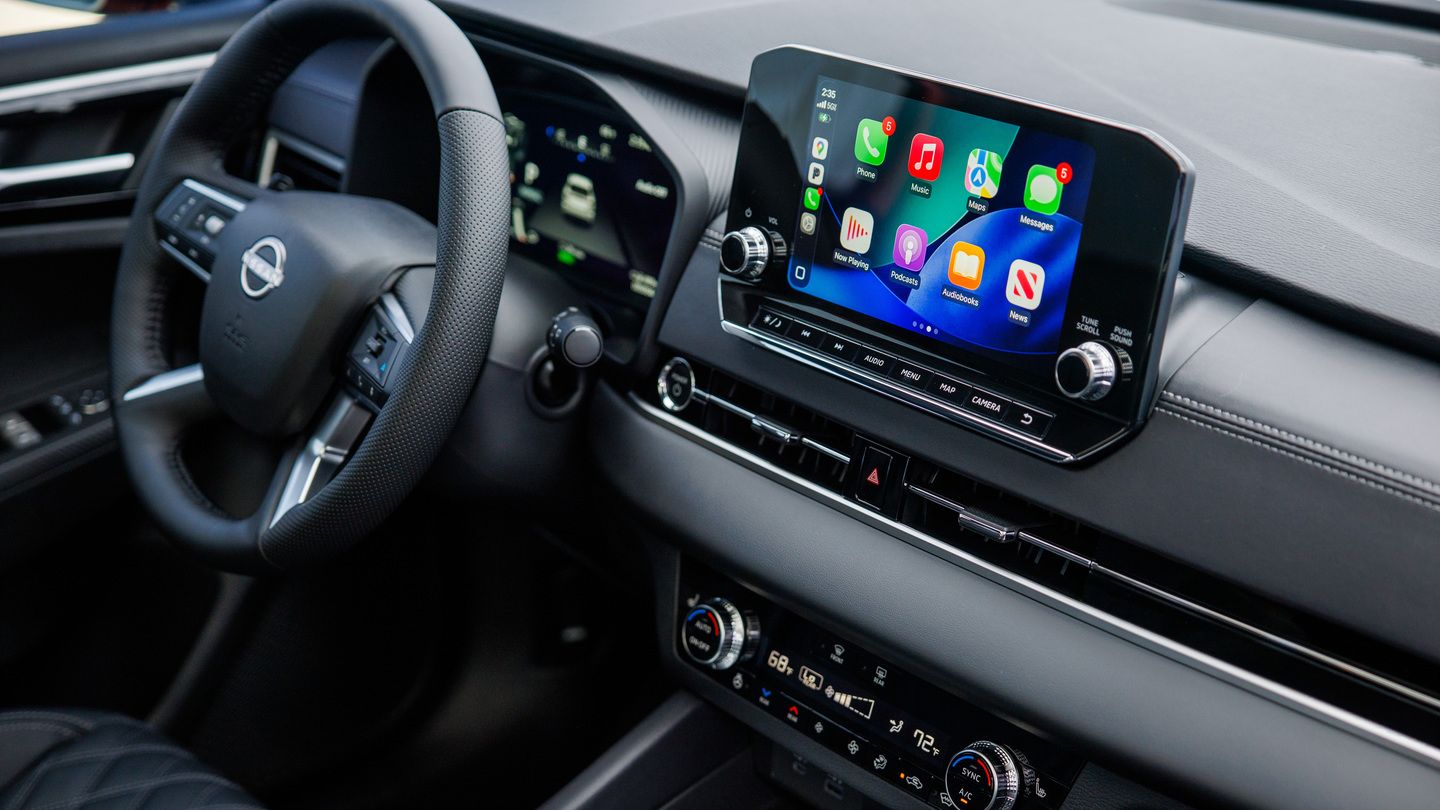
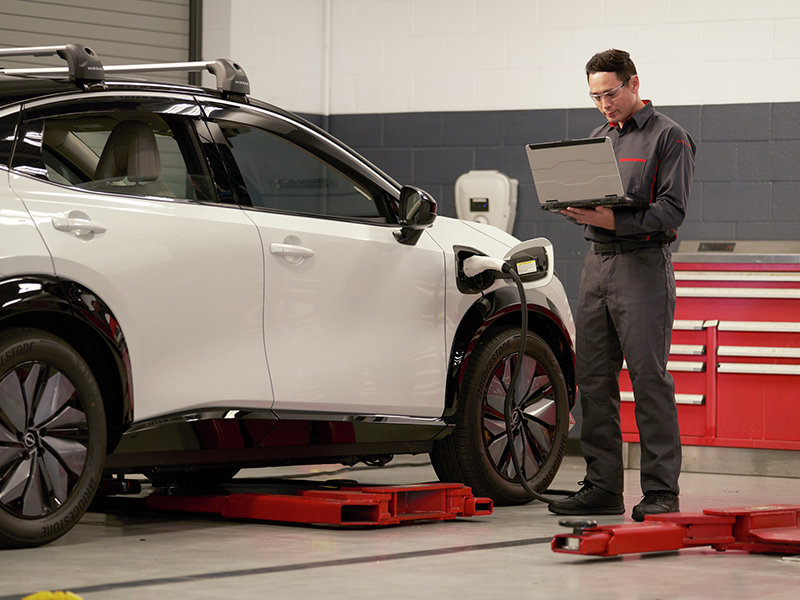
Nissan e-POWER is a hybrid system that uses electric motors to move the vehicle and a gasoline engine to generate electricity. You fill the fuel tank at a gas station, while the wheels receive their driving power from electric motors. The 2027 Nissan Rogue Hybrid introduces this technology to Canada, giving Waterloo Nissan shoppers another option when considering an electrified SUV.
How the system works
The main components include a gasoline engine, a generator, a high-voltage battery and an electric drive system. The engine runs the generator, which supplies electrical energy. The battery stores energy and supports the motors that drive the wheels.
Engine operation is managed according to the vehicle’s electrical needs. Because the gasoline engine is not mechanically connected to the wheels, its speed does not have to rise and fall in direct proportion to road speed. Nissan can operate it in an efficient range when generating electricity.
The battery also recovers energy through regenerative braking. When the vehicle slows, the electric drive system can capture energy that would otherwise be lost and return it to the battery.
How e-POWER differs from other hybrids
Nissan describes e-POWER as a series hybrid. In a parallel hybrid, the gasoline engine and an electric motor can both contribute directly to driving the wheels. With e-POWER, the gasoline engine’s role is generating electricity, and the electric motors provide propulsion.
That arrangement gives the vehicle the immediate response associated with electric motors. There is also no conventional transmission shifting between gears during acceleration.
An e-POWER vehicle does not need to be plugged in. Its battery receives energy from the engine-driven generator and regenerative braking, so ownership does not require a home charging installation. It still uses gasoline, and the engine runs whenever the system needs it.
What drivers can expect on the road
Nissan’s system is designed to provide smooth acceleration and quiet operation, particularly when battery power allows the gasoline engine to remain off. In lower-speed city and suburban driving, electrical demand can be modest enough for the engine to operate less frequently.
At highway speeds or under heavier loads, the engine may run more often to supply sustained electrical power and maintain battery charge. Drivers continue to use the accelerator and brake as usual, with the system managing energy flow automatically.
In the Canadian 2027 Rogue Hybrid, e-POWER is paired with standard dual-motor all-wheel drive. The vehicle can adjust driving force between the front and rear motors as conditions change.
What changed with the third generation?
The Rogue Hybrid uses Nissan’s third-generation e-POWER technology. This generation incorporates an engine developed specifically for power generation and a compact assembly integrating five major electric-drive components.
Bringing these components together helps reduce energy losses and vibration. Nissan has also refined cooling and electrical operation to improve efficiency. These engineering changes support the system’s main purpose: producing electricity efficiently while delivering consistent electric-motor response.
Nissan first introduced e-POWER in 2016 and has developed it across three generations. Nearly two million e-POWER-equipped vehicles have been sold globally in 68 countries. Waterloo Nissan can explain how the Canadian Rogue Hybrid applies that technology and help you decide whether its refuelling routine and driving characteristics suit your needs.