The 2027 Nissan Rogue Hybrid brings a redesigned exterior, a new cabin and Nissan’s e-POWER hybrid technology to Canadian buyers. Standard dual-motor all-wheel drive and electric-motor propulsion are central to the change, while everyday usability remains a priority. Here is a closer look at what Waterloo Nissan shoppers can expect from the new Rogue Hybrid.
How does the new Rogue Hybrid deliver its power?
The e-POWER system combines a dedicated 1.5-litre turbocharged gasoline engine with a battery and two electric motors. The engine generates electricity; the motors drive the wheels. Total system output is 225 hp.
Because the wheels are driven electrically, the Rogue Hybrid does not use a conventional transmission. Drivers refuel with gasoline, and external charging is not required. Standard AWD continuously manages torque between the front and rear motors to help maintain traction.
Nissan estimates consumption for the Rogue Hybrid SR at 5.9 L/100 km in the city, 6.5 L/100 km on the highway and 6.2 L/100 km combined. These figures come from Nissan’s internal testing and remain subject to Natural Resources Canada confirmation. Actual fuel consumption will vary.
What has changed inside?
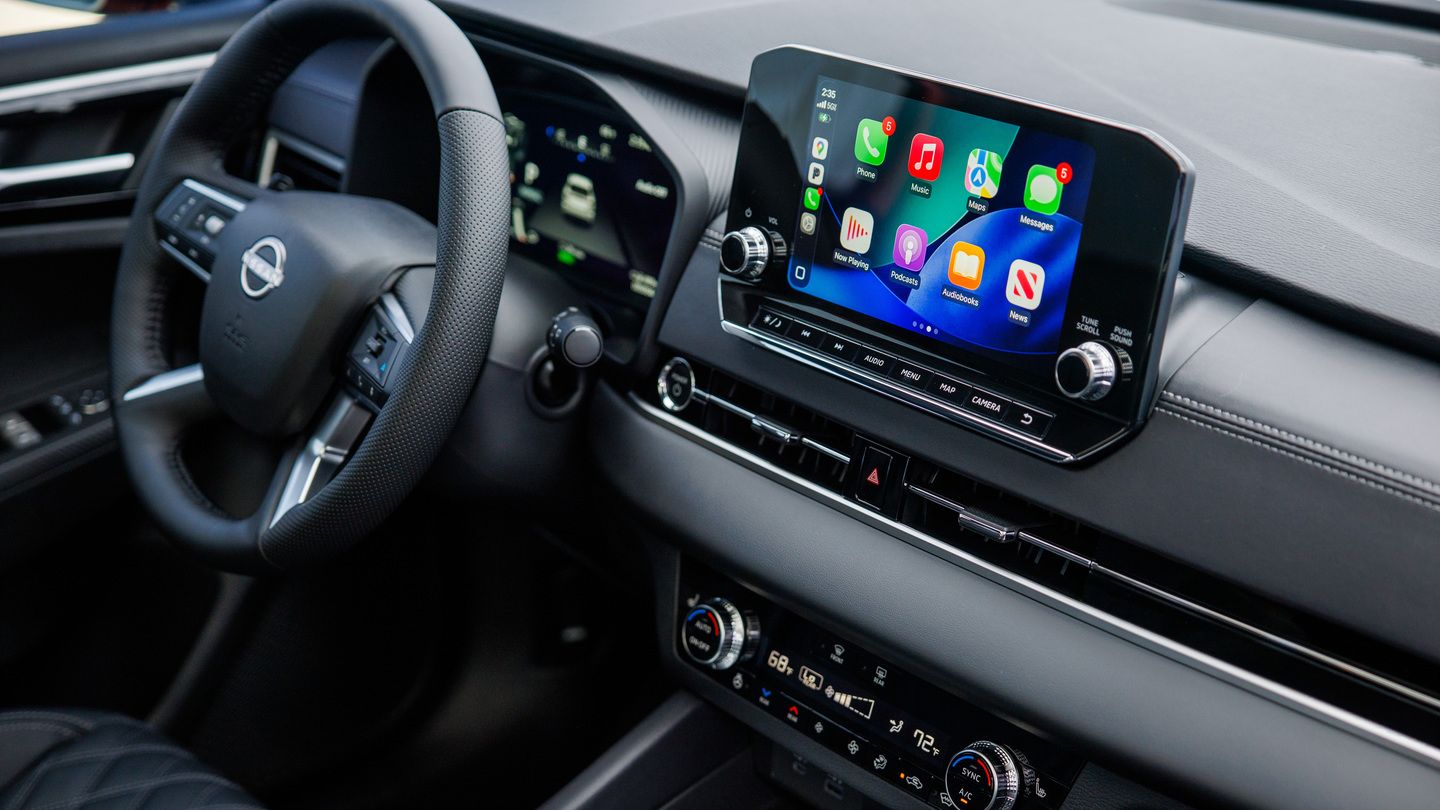
The new cabin combines digital displays with physical climate controls. A 12.3-inch touchscreen and wireless Apple CarPlay and Android Auto are standard, while SR and Platinum receive a 14.3-inch touchscreen with Google built-in. The larger system incorporates Google Maps and access to compatible applications; connected features may require activation or subscriptions.
Canadian SV equipment includes heated front seats and a heated steering wheel. Platinum adds ventilated front seats, heated rear seats and a 10-speaker Bose audio system. An available panoramic moonroof opens up the cabin visually.
The SR has a more sporting appearance, including 19-inch wheels, unique exterior details and gloss-black accents. Its dual 14.3-inch displays also distinguish it from the SV.
How practical is the Rogue Hybrid for families?
The Rogue Hybrid seats five and provides up to 880.7 litres of cargo space behind the second row. Folding the rear seats increases capacity to 1,866.1 litres.
Rear doors open to nearly 90 degrees, making access easier when loading children or installing a child seat. Nissan also provides five lower LATCH anchors across the rear seat, allowing additional flexibility in child-seat placement, including the centre position. Child-seat installation must follow the vehicle and restraint manufacturers’ instructions.
Storage beneath the centre console has a larger opening, while the cargo area is designed to accommodate three large suitcases standing vertically beside one another.
What assistance technologies are available?
Standard safety equipment includes Automatic Emergency Braking, Blind Spot Warning and Intervention, Lane Departure Warning and Intelligent Lane Intervention.
An upgraded ProPILOT Assist system offers revised lane-centering and cruise-control operation. SR and Platinum add Auto Lane Change and Hands-Off Traffic Jam Support for specific highway situations. These features require driver supervision and operate within defined conditions.
The available 3D Enhanced Intelligent Around View Monitor provides additional camera perspectives for parking and manoeuvring. Smooth Stop technology manages brake pressure near the end of a stop, while e-Pedal allows regenerative deceleration when the driver lifts off the accelerator.
Which versions are coming to Canada?
Nissan’s launch plan starts with the SR in fall 2026, followed by the full SV, SR and Platinum range in early 2027. Canadian MSRP begins at $39,998 for the SV, excluding freight and PDI, applicable fees and taxes.
Contact Waterloo Nissan to discuss expected availability and compare the equipment offered across the new Rogue Hybrid lineup.