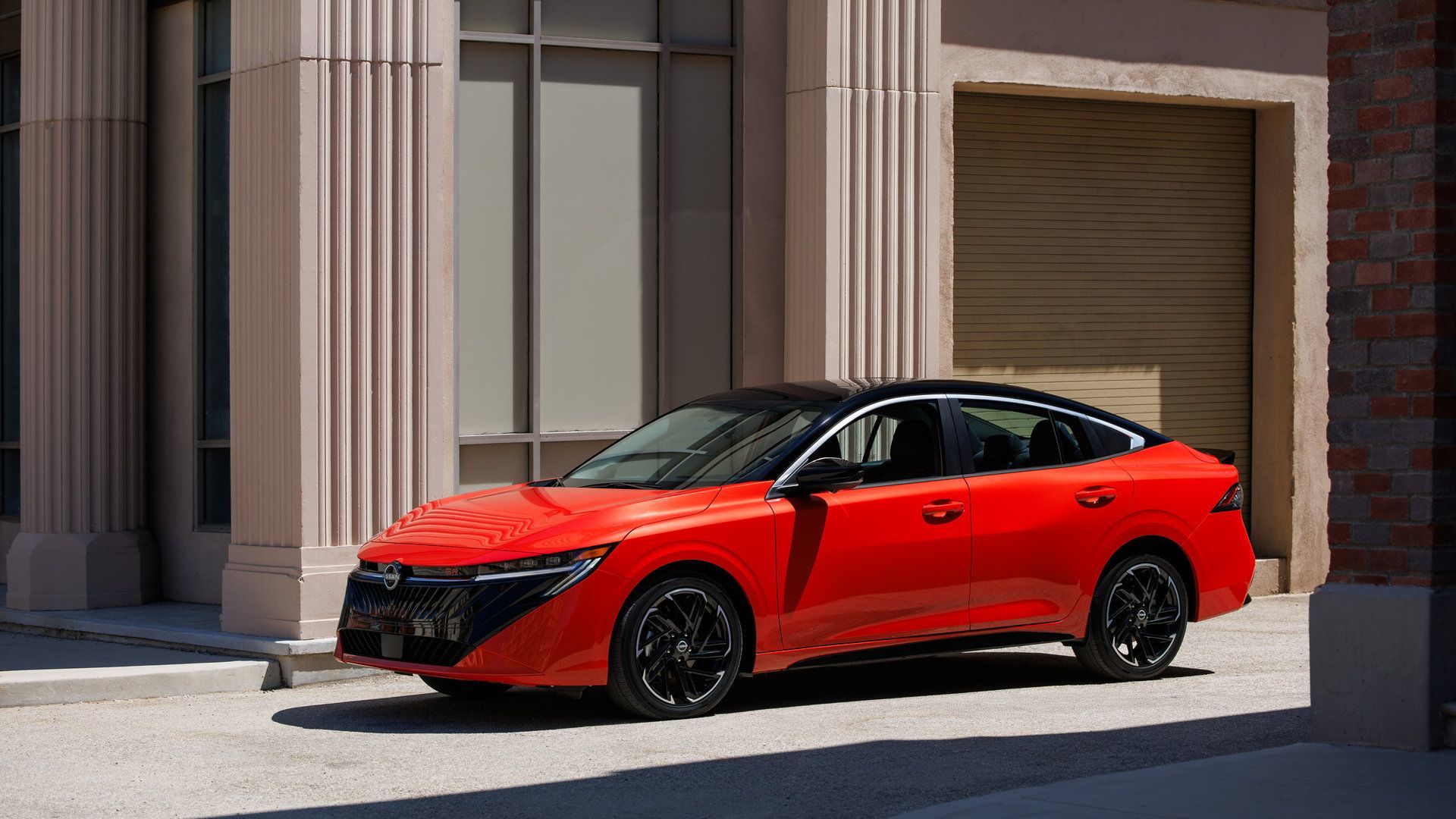
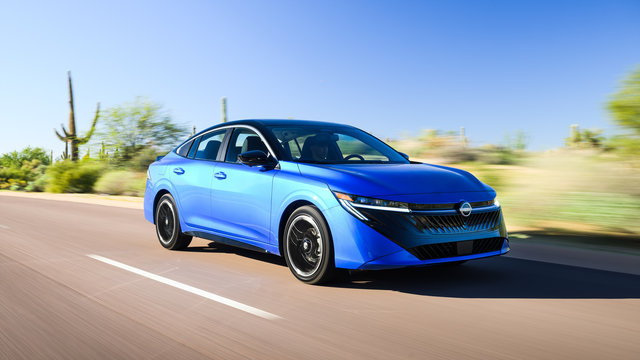
Filling up less often starts with a handful of engineering choices under the hood, not a lucky tank of gas. For Ontario commuters navigating daily stop-and-go traffic, those choices decide how often you see the inside of a gas station. The 2026 Nissan Sentra leans on a proven engine, a retuned transmission, and a standard idle stop/start system to help keep that number down.
What Powers The 2026 Sentra’s Efficiency
Every 2026 Sentra trim uses the same standard 2.0-litre inline-four engine, rated at 149 horsepower and 146 lb-ft of torque. It pairs with a Xtronic CVT that Nissan retuned for this generation, and idle stop/start comes standard.
The engine relies on direct injection and continuous variable valve timing. Those two details work together so the engine draws only as much fuel as the moment demands, whether you’re merging onto a busy road or holding a steady cruising speed.
How The Retuned CVT And Idle Stop/Start Work Together
The Xtronic CVT has powered Sentra for years, and Nissan retuned it for 2026 to deliver a smoother, more natural acceleration feel. A CVT has no fixed gears, so it can hold the engine near its most efficient point instead of shifting through ratios that waste fuel.
Idle stop/start works quietly in the background. At a red light or in a traffic jam, the engine shuts off automatically. Release the brake and it restarts right away, so the car isn’t burning fuel while it’s sitting still.
Why It Matters In Everyday Driving
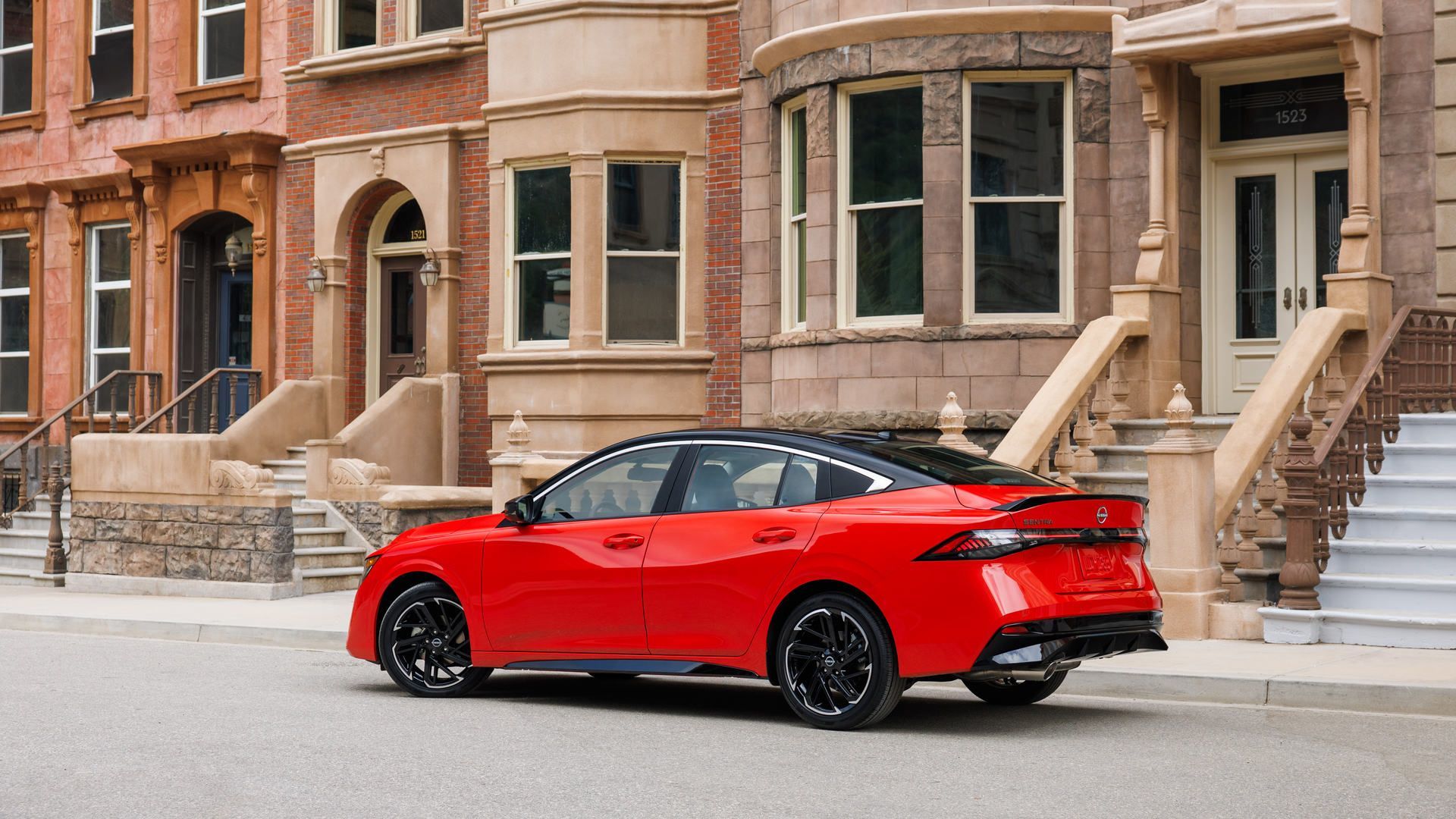
Idle stop/start earns its keep in exactly the kind of driving most Ontario commuters do: short trips, traffic lights, and stop-and-go congestion. That’s where an engine can burn fuel for no reason while parked in place, and where shutting it off automatically adds up over a week of driving.
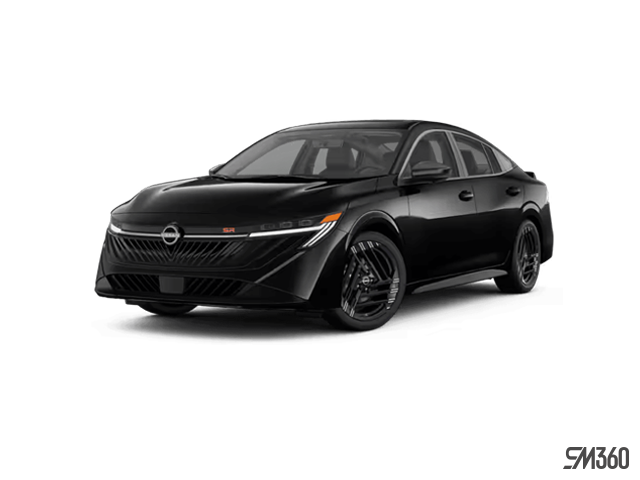
The fuel economy ratings show how small design differences carry a small cost. The S and SV are rated at 7.9 L/100km city, 6.1 L/100km highway and 7.1 L/100km combined. The SR, with its larger wheels and sport-tuned features, rates slightly higher at 8.0 L/100km city, 6.4 L/100km highway and 7.2 L/100km combined.
|
Trim
|
City
|
Highway
|
Combined
|
|
S / SV
|
7.9 L/100km
|
6.1 L/100km
|
7.1 L/100km
|
|
SR
|
8.0 L/100km
|
6.4 L/100km
|
7.2 L/100km
|
That’s a modest 0.1 L/100km gap in combined driving, small enough that the SR’s sportier stance and standard 18-inch wheels cost very little at the pump compared with the S and SV’s 16-inch wheels.
Aerodynamics play a role too. Nissan shaped the trunk and rear fenders to reduce the wake behind the car, narrowed the wheel opening areas, and designed the side mirrors specifically to cut drag. Flat underbody covers and tire deflectors smooth airflow beneath the car, details that pay off most at highway speeds, where wind resistance works hardest against fuel economy. The SR’s drag coefficient of 6.7 sits slightly below the 6.8 rating on the S and SV.
Underneath, an independent strut front and multi-link rear suspension keep the car settled through corners and lane changes, while standard rear disc brakes provide confident stopping power. Both help the car hold its line and slow smoothly, without the energy loss that comes from constant steering or braking corrections.
Who The 2026 Sentra Fits Best
The 2026 Sentra suits drivers who value predictable running costs over outright thrills. Its trunk holds 404.9 litres of cargo, shaped with a low liftover height so bulky items load easily, useful for anyone juggling a commute with weekend errands.
It pairs that efficiency with features drivers now expect. A 12.3-inch touchscreen with wireless Apple CarPlay and Android Auto comes standard, along with three USB-C ports for keeping devices charged on longer drives. Standard Intelligent Forward Collision Warning and Intelligent Emergency Braking with Pedestrian Detection add daily reassurance without turning the car into a stripped-down commuter box.
For Ontario shoppers cross-shopping the compact sedan segment, the Sentra earns a spot on the shortlist for buyers who care most about reliability, fuel economy, and a proven powertrain over headline horsepower.
See The 2026 Sentra’s Efficiency In Person
The 2026 Nissan Sentra pairs a proven 2.0-litre engine, a retuned Xtronic CVT, and standard idle stop/start to keep daily fuel costs manageable, alongside modern connectivity and safety features suited to an everyday commuter sedan.
Visit Waterloo Nissan in Waterloo, Ontario to see the 2026 Sentra in person, and ask the sales team about trim-specific fuel economy and how idle stop/start performs in real city driving.