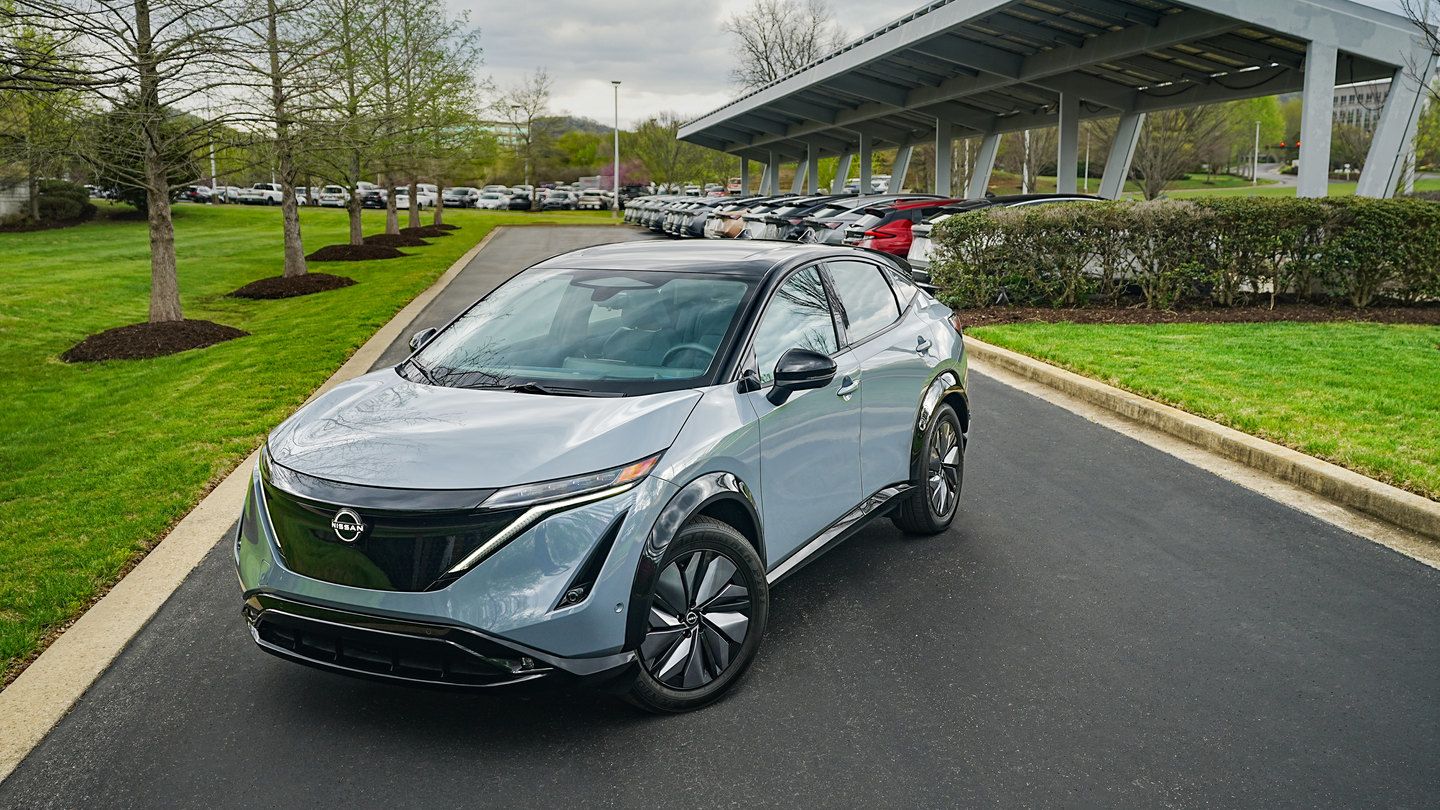
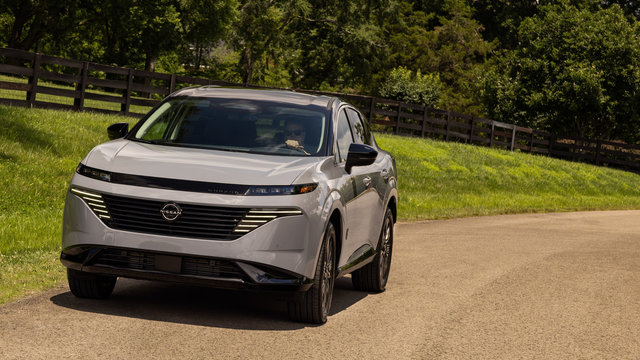
One of the most practical features in the 2026 Nissan ARIYA e-4ORCE is one that drivers don't always think to ask about until they've tried it: the e-Step system. It changes the way the accelerator pedal controls the car, letting you manage speed in most driving situations without moving your foot to the brake. For anyone who spends time on Waterloo's King Street or University Avenue — or commutes on the 401 — it's worth understanding how it works and when to use it.
The e-Step system is available on all 2026 ARIYA e-4ORCE grades in Ontario: the SL e-4ORCE, SL+ e-4ORCE, and Platinum+ e-4ORCE. Here is a detailed look at what the system does, how you control it, and how it behaves differently in city versus highway conditions.
What the e-Step System Actually Does
When e-Step is turned on, the ARIYA's regenerative braking system becomes significantly more aggressive. Lifting your foot off the accelerator — rather than just easing it back — generates enough deceleration to slow the vehicle without touching the brake pedal. The accelerator becomes a two-way speed controller: press it to go faster, ease it or release it to slow down.
This is what's commonly called one-pedal driving, and it has two practical benefits. First, it reduces foot movement between pedals, which is less fatiguing in stop-and-go traffic. Second, every deceleration event recovers energy back into the battery through regenerative braking — so you're recapturing energy every time you slow for a light or an off-ramp.
The system does not eliminate the brake pedal. The owner's manual is clear: the brake pedal should always be used when conditions require, including on steep downhill grades and icy roads. But in typical city and suburban driving, e-Step handles the majority of deceleration on its own.
How to Turn e-Step On and Off
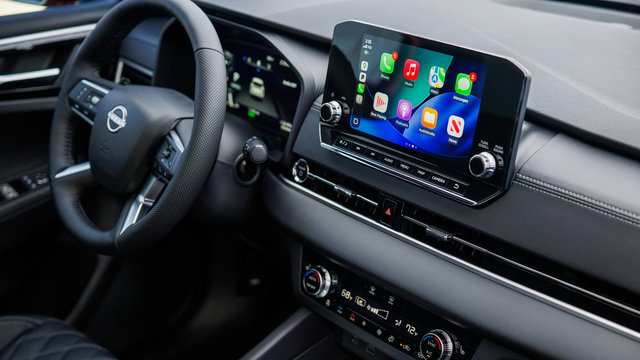
The e-Step switch is a haptic button located on the centre console, grouped alongside the Drive Mode selector. Press it once to activate; press it again to deactivate. The system's status shows in the vehicle information display — blue with the word "e-Step" when active, grey with "e-Step OFF" when deactivated.
The system resets to off each time the EV system restarts. If you prefer to keep e-Step active by default, a "Retain Mode" setting is available in the Driver Assistance menu of the vehicle information display. This setting persists even after a factory reset, so once you've set it, it stays.
How e-Step Behaves in City Driving
City driving in Waterloo involves frequent stopping — traffic lights, crosswalks, intersections near Wilfrid Laurier and the University of Waterloo, and rush-hour flow on Weber Street. This is where e-Step provides the most tangible benefit.
With e-Step on, approaching a red light means gradually releasing the accelerator as you approach the stop zone. The car slows progressively and smoothly. The deceleration level increases as more foot pressure comes off the pedal, so you have a range of deceleration available depending on how much you ease back. The brake lights illuminate automatically when the deceleration reaches a level equivalent to normal braking — so drivers behind you are notified in the usual way.
The vehicle will slow significantly when the accelerator is fully released but will not come to a full stop through e-Step alone — you'll need the brake pedal to come to a complete standstill. At very low speeds, the car enters a creep mode that approximates the behaviour of e-Step being off, giving you a familiar sensation for final positioning.
How e-Step Behaves on the Highway
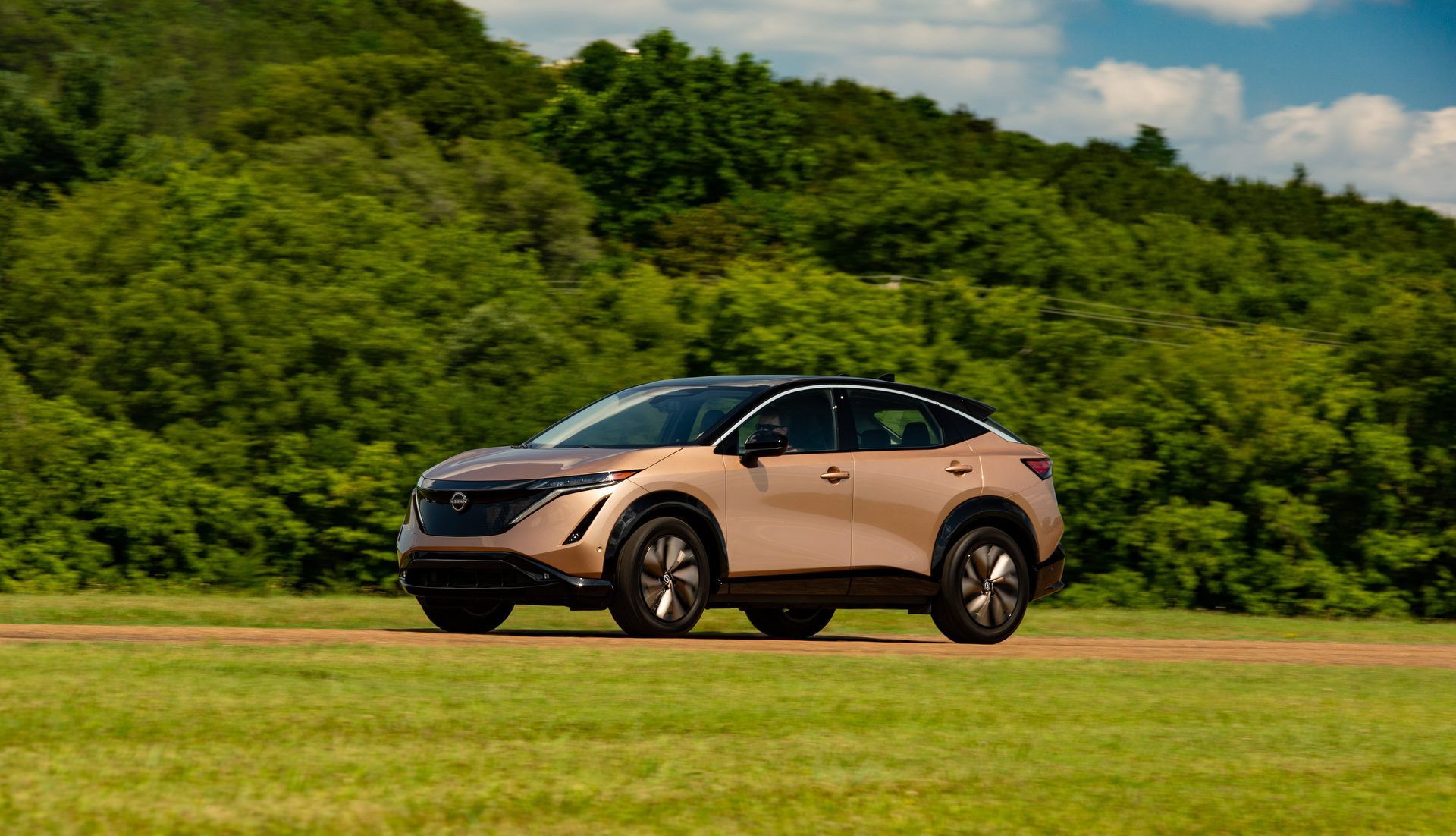
On a highway like the 401 or Highway 85, one-pedal driving is a different experience. The deceleration available from e-Step at higher speeds is less aggressive than at low speeds by design — the maximum deceleration changes according to vehicle speed. This means e-Step is less about stopping and more about managing pace on the highway.
Easing off the accelerator at highway speed produces a smooth, progressive reduction in speed — useful for coasting into a slower traffic section or managing your following distance without abrupt brake inputs. It feels more like engine braking in a conventional car than a sharp stop.
One important note: e-Step does not function when ProPILOT Assist is active. If you're using ProPILOT Assist on the highway, the system takes over speed management and e-Step is suspended. Switch back to manual driving and e-Step resumes where you left off.
What e-Step Does Not Do
The documentation is specific about e-Step's limitations, and they're worth knowing:
- e-Step should not be used on steep downhill roads where the system may not provide sufficient deceleration
- Do not use e-Step when towing a trailer with an AWD model
- On icy roads, e-Step may not decelerate the vehicle sufficiently — use the brake pedal
- If e-Step malfunctions, a warning message will appear on the vehicle information display and the system will shut off automatically
These are edge cases, not everyday concerns, but they reflect the system's appropriate scope. e-Step is a city and suburban commuting tool. It excels there.
The Energy Recovery Angle
Every deceleration event in e-Step mode sends energy back into the ARIYA's battery pack. On the SL e-4ORCE (66 kWh total / 63 kWh usable) and the SL+/Platinum+ (91 kWh / 87 kWh usable), this recovery adds up meaningfully over a day of Waterloo driving. The more frequently you're stopping and slowing, the more the system works in your favour.
This is a fundamental advantage of electric vehicles over combustion cars: the energy that goes into slowing down doesn't have to disappear as heat through the brakes. e-Step maximizes how much of that energy comes back.
Experience e-Step at Waterloo Nissan
The best way to understand e-Step is to drive with it on. The 2026 ARIYA e-4ORCE is on sale now. If you'd like to arrange a test drive with the team at Waterloo Nissan, reach out and we'll schedule a route that lets you feel the system at work — both around the city and on the highway.